
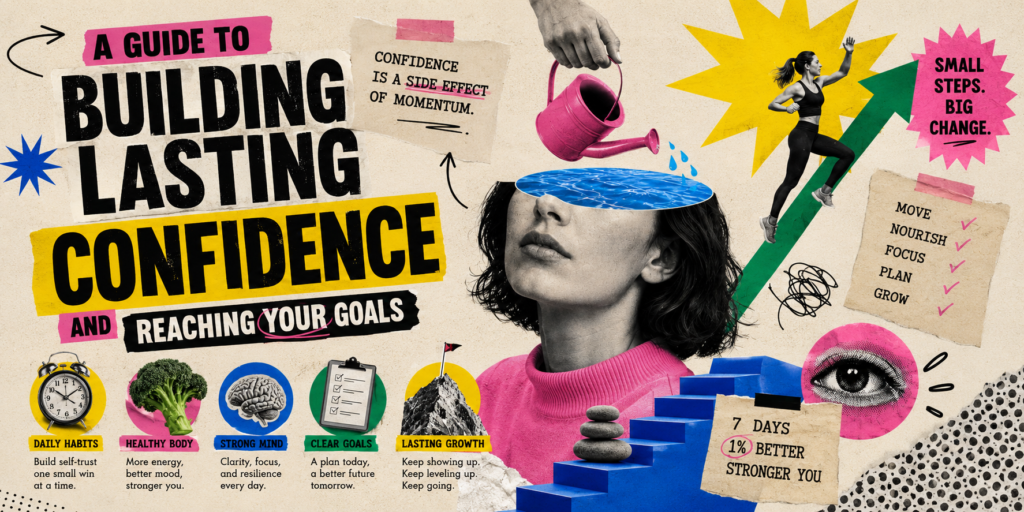
For busy professionals juggling work demands, family responsibilities, and health goals, personal development challenges often show up as a quiet loop of stalled plans and second-guessing. Motivation for change fades when progress feels inconsistent, and building self-confidence starts to seem like something reserved for “disciplined” people. The truth is that confidence is usually a side effect of momentum, and momentum can come from steady lifestyle improvements that make follow-through easier. With the right goal achievement strategies, daily effort starts to feel more reliable.
Quick Summary and Key Takeaways
- Build confidence with daily habits that strengthen your body and mindset.
- Choose fitness routines that boost energy, capability, and follow-through on goals.
- Use nutritious eating to support better mood, focus, and steady progress.
- Practice stress management techniques to stay calm, clear, and resilient.
- Set personal goals that guide career transitions and keep actions aligned daily.
Daily Habits That Build Confidence Fast
Confidence grows when your actions match your intentions, even in tiny ways. These habits keep you moving forward on tough days, so goal progress feels steady and personal instead of all-or-nothing.
Morning Affirmation Snapshot
- What it is: Say one present-tense statement about who you are becoming.
- How often: Daily
- Why it helps: It trains your attention toward capability, not doubt.
Feelings-First Goal Journal
- What it is: In 3 minutes, write about your feelings, biggest hopes, even your fears.
- How often: Weekly
- Why it helps: Emotional clarity makes your goals feel real and motivating.
Minimum Movement Session
- What it is: Do 10 minutes of brisk walking, mobility, or bodyweight basics.
- How often: Daily
- Why it helps: Keeping promises to yourself builds self-trust quickly.
Balanced Plate Anchor
- What it is: Add protein and a colorful produce item to one meal.
- How often: Daily
- Why it helps: Steadier energy supports better mood and follow-through.
Two-Block Time Plan
- What it is: Schedule two 25-minute focus blocks for your top priority.
- How often: Daily
- Why it helps: Consistent progress reduces overwhelm and builds momentum.
Turn a Dream Business Into a 30-Day Confidence Goal
Those same daily habits become even more powerful when you aim them at a real-world project you care about, like launching your dream business. Pick one small, clear 30-day goal (a simple offer you can actually deliver), then write a one-page plan that spells out what you’re selling and what you need to do first. Next, take care of the basics, your legal and admin setup, so you can focus on building momentum, even when the early days feel uncertain. An all-in-one platform like ZenBusiness can help you form an LLC, manage compliance, create a website, or handle finances. Keep showing up through the doubt, and you’ll see how confidence grows with each step and decision.
Understanding the Psychology Behind Confidence
Confidence gets easier to build when you understand the mental mechanics behind it. A growth mindset treats skill as trainable, while the self-efficacy concept explains confidence as your belief you can carry out the actions that create results. Add a simple behavior model and intrinsic motivation, and your plan shifts from willpower to a repeatable system.
This matters because motivation is unreliable on busy days, but structure is dependable. When actions feel linked to identity and progress, you follow through more often and recover faster after mistakes. You also stop reading setbacks as proof you are not cut out for it.
Think of training for a 5K: you log short runs, track wins, and raise the challenge slowly. Even if academic achievement is small, pairing a mindset with consistent reps makes confidence stick. With that foundation, common barriers and setbacks become simpler to troubleshoot and plan around.
Quick Answers to Common Confidence Questions
Q: What are some easy daily habits I can start right now to boost my self-confidence?
A: Pick one tiny promise you can keep daily, like a 10-minute walk or writing three quick priorities. Track it with a simple checkmark so your brain sees proof of follow-through. End the day by listing one win and one lesson to build confidence without pressure.
Q: How can I overcome feelings of overwhelm or uncertainty when trying to achieve my personal goals?
A: Shrink the goal to the next doable action you can complete in 15 minutes, then pause and reassess. If your mind says “I should handle this without a plan,” notice that sense of overconfidence can quietly fuel chaos, not progress. Create a short “when stressed, I will” script, like breathe for 60 seconds, then do step one.
Q: What practical steps can help me maintain motivation and reduce stress during life changes?
A: Use a weekly reset: choose one priority, one boundary, and one recovery habit. Keep motivation steady by planning for low-energy days with a “minimum version” of your routine. Ask for support early, since change can require both psychological adaptation and social reintegration like psychological adaptation, and social reintegration.
Q: How do I create a simple routine that supports both mental and physical well-being?
A: Anchor your day with three basics: movement, nourishment, and a shut-down time. Start with two minutes of mobility after waking, a protein-forward meal, and a consistent bedtime cue like dimming lights. Keep it simple enough that you can do it on messy days.
Build Confidence by Taking One Small Action for 7 Days
Confidence often stalls when goals feel big, setbacks feel personal, and motivation depends on the “right” mood showing up. The way through is the approach outlined here: empowerment through habits, taking immediate action, and focusing on small, repeatable wins instead of perfect outcomes. Applied consistently, that mindset builds trust in effort, sustaining motivation and creating momentum for long-term confidence building and positive life changes. Confidence grows when actions are small, consistent, and kept on schedule. Choose one next step and commit for 7 days, tracking one small win daily. That simple follow-through strengthens resilience, supports better health and performance, and makes growth feel stable enough to continue.

